
Relapse doesn't only happen during a crisis - research shows people in recovery are just as vulnerable, sometimes more so, when life is going well.
Nearly half of people treated for a substance use disorder will relapse at some point - a rate on par with chronic illnesses like hypertension and asthma (Source: National Institute on Drug Abuse). Yet one of the most confusing moments for families is watching someone relapse not during a crisis, but right after landing a new job, repairing a relationship, or hitting a sobriety milestone. Addicts relapse when things are good because recovery isn't just about surviving hard times - it's about staying vigilant when the brain, and the person, feel safe enough to let their guard down.
That single sentence answers the search query, but the "why" behind it is where real prevention starts. Understanding the specific mechanisms - brain chemistry, complacency, unspoken stress, and unmet basic needs - is what separates a relapse prevention plan that actually works from one that only accounts for obvious triggers like stress or grief.
"Relapse is rarely about the good day itself. It's about what the good day allows someone to stop doing."
Relapsing during a stable period means a person returns to substance use despite an absence of the obvious stressors - job loss, conflict, grief - that most people assume trigger a return to use. Clinically, this happens because recovery is an active, ongoing process, not a finish line. When life stabilizes, many people unconsciously reduce the very behaviors - meetings, therapy, honest check-ins - that kept them stable in the first place.
If your loved one is navigating the early stage of addiction recovery, understanding this dynamic early can help the whole family build a stronger foundation before stability arrives - and then protect it once it does.
"Good times aren't a reward for staying sober. To a rewired brain, they can look a lot like an invitation."
Substance use disorder is classified as a chronic brain disease, not a matter of willpower, and that distinction explains why stability doesn't equal safety. Chronic substance use dysregulates the brain's dopamine system, and when drugs or alcohol are removed, dopamine levels can crash below baseline - which is part of why early recovery can feel emotionally flat even when circumstances are objectively good.
The encouraging news: this is reversible. Research on neuroplasticity shows that with sustained abstinence, dopamine transporter levels in the brain's reward center can return to near-normal function after roughly 14 months (Source: Recovery Research Institute). But during the months before that recalibration completes, positive emotions and old reward pathways can still cross wires - which is exactly why a wedding, a promotion, or a reunion with family can activate the same neural circuitry that once fired during substance use.
This is also why mindfulness and meditation practices are increasingly integrated into evidence-based treatment - they help rewire the brain's reward pathways without substances.
Most articles on this topic stop at two or three reasons. In practice, clinicians see at least six distinct - and often overlapping - mechanisms at work.
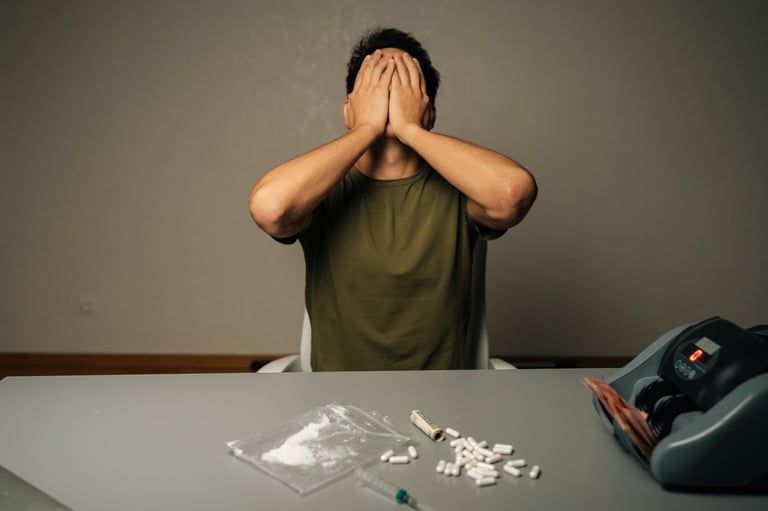
"Pink clouding" describes the wave of euphoria and optimism common in early recovery. It feels like relief - finally, things are working. But that same optimism can convince someone they've "beaten" addiction and no longer need meetings, therapy, or medication support. SAMHSA data shows this overconfidence phase contributes directly to the 40–60% relapse rate, because the drop-off in support tends to happen quietly, weeks before any substance is actually used (Source: SAMHSA).
Active addiction, chaotic as it is, keeps the brain occupied - obtaining the substance, using it, recovering from it. Stable recovery is calmer, and calm can feel unfamiliar or even boring to a nervous system wired for intensity. Without new sources of excitement or purpose, some people start romanticizing their old life rather than building a new one. Finding sober weekend activities that provide genuine fulfillment is one practical way to counteract this drift.
Celebrations, holidays, and milestones are loaded with cues. If someone always celebrated success with a drink or a drug, an ordinary win - a raise, a graduation, a first date - can trigger the same craving pattern that stress does. Positive emotion, not just negative emotion, can be a relapse trigger.
Even when the "big picture" looks good, day-to-day needs still matter. The HALT framework - Hungry, Angry, Lonely, Tired - is a relapse-prevention tool that originated in 12-step communities to flag exactly this blind spot. A person can have a great job and a repaired marriage and still be skipping meals, running on four hours of sleep, and quietly resentful - all of which lower the brain's capacity to manage cravings (Source: American Addiction Centers).
People with substance use histories are often skilled at appearing fine. Someone can look, by every outward measure, like they're thriving, while privately struggling with anxiety, unresolved trauma, or a problem they haven't told anyone about. The gap between the outside and the inside is where relapse risk quietly builds. This is why learning to support without enabling is critical - families need to know how to stay connected without becoming the recovery police.
For some, sustained success feels threatening rather than reassuring. If someone doesn't yet believe they deserve a stable, happy life, they may unconsciously undermine it - skipping support meetings, picking fights, or reaching for a substance to regain a familiar (if painful) equilibrium.
Relapse is rarely a single decision - it's typically a three-stage process, and this chain runs identically whether the trigger is a crisis or a celebration.
No one is consciously thinking about using yet, but warning signs appear: skipping meetings, bottling up feelings, isolating even while everything looks fine from the outside.
Internal conflict builds. Part of the person wants to stay sober; another part starts romanticizing past use, minimizing consequences, or fantasizing about "just once."
The person actually uses the substance again. This stage is the most visible, but by the time it happens, the emotional and mental stages have usually been building for days or weeks - good times included.
Understanding this chain is also why knowing the difference between outpatient vs inpatient treatment matters - different levels of care provide different intensities of monitoring that can catch emotional-stage warning signs before they progress.
Quietly tapering off structure. Reducing meeting attendance or therapy frequency because "I've got this" is the single most common precursor to relapse during stable periods.
Treating recovery as finished rather than ongoing. Addiction is a chronic condition; stability is a result of continued management, not a cure.
Avoiding honest conversations about cravings. Many people assume cravings during good times mean something is wrong with their recovery. In reality, cravings can appear at any point and don't need to be hidden or treated as failure.
Over-scheduling and burning out. Rebuilding a career, relationships, and routines all at once can quietly recreate the exhaustion and stress that HALT warns against.
Isolating from the recovery community once life "normalizes." Support networks built during treatment are often the first thing to lapse when life gets busy and good.

A man in his late 30s, married with two children, working a stable job in the Kitsap County area, six months into recovery from alcohol use disorder following an intensive outpatient program.
By all outward measures, life was good - a promotion at work, a repaired marriage, and full custody restored. He gradually stopped attending his weekly aftercare group, reasoning that he was "handling it" and didn't want to take time away from his family. He kept telling himself he'd go back "once things settled down."
After a near-relapse during a work celebration - he found himself standing at an open bar, drink in hand, before catching himself - he called his outpatient counselor the same night. His treatment team restructured his relapse prevention plan to include a mid-week check-in call (rather than requiring in-person attendance), a HALT-based daily self-check, and a family session to help his spouse recognize early warning signs.
Eighteen months later, he has maintained sobriety, attributing the save to catching the emotional-stage warning signs (isolation, skipped check-ins) before they became a physical relapse.
The lesson: Progress in recovery is not a reason to reduce support - it's a reason to make that support easier to sustain long-term.
"The goal isn't to distrust good days. It's to make sure your recovery plan doesn't quietly shrink while your life grows."
Maintain meeting attendance, therapy sessions, or check-ins on a fixed schedule rather than an as-needed basis. Consistency, not crisis, should drive your routine.
Before assuming a craving or irritability is random, ask: am I hungry, angry, lonely, or tired? Addressing the basic need often resolves the craving.
Tell your support network in advance when a celebration, holiday, or milestone is coming up, and make a plan for how you'll navigate it substance-free.
Build new sources of purpose and stimulation - exercise, hobbies, sober weekend activities, mentoring others in early recovery — so stability doesn't default to emptiness.
A craving during a good stretch isn't a sign of failure. Say it out loud to your sponsor, therapist, or care team the same day it happens.
Life changes; your plan should evolve with it rather than sit untouched in a drawer from your last treatment episode.
If you love someone in recovery, it's natural to relax once life looks stable again. But the warning signs of emotional-stage relapse are often visible to the people closest to someone before they're visible to the person themselves.
The most useful thing you can do is stay engaged without becoming the recovery police. Ask direct, caring questions ("Have you been to group this week?") rather than vague ones ("How are you?"), and consider joining a family support program yourself — recovery is a household process, not a solo one. For deeper guidance on navigating this role, read our guide to supporting an addict without enabling.
Cascadia Addiction Treatment provides outpatient and intensive outpatient relapse prevention services to adults across Bremerton and Kitsap County, Washington. Because relapse during stable periods often stems from quietly reduced support rather than dramatic crisis, our programs are built around flexible, sustainable structure: in-office or telehealth sessions, day and evening scheduling, and relapse prevention planning that adapts as your life changes — not a one-size-fits-all aftercare checklist.
Your first consultation is free. You do not need a referral. You do not need to have it all figured out.
Roughly 40–60% of people treated for substance use disorders relapse at some point — a rate comparable to other chronic diseases, not a sign of personal failure.
Positive emotions and milestones can act as relapse triggers just as strongly as stress or crisis.
Pink cloud syndrome — early recovery euphoria — often leads to overconfidence and a quiet reduction in support and structure.
The HALT framework (Hungry, Angry, Lonely, Tired) catches relapse risk hiding underneath an otherwise "good" life.
Relapse happens in three stages — emotional, mental, physical — and catching the emotional stage early is the most effective intervention point.
Family members often notice emotional-stage warning signs before the person in recovery does.
A relapse prevention plan should be revisited regularly, not treated as a one-time document from treatment.
Addicts relapse when things are good not because recovery isn't working, but because recovery is an active process that good times can quietly interrupt. Overconfidence, unspoken struggles, unmet basic needs, and positive triggers all chip away at vigilance in ways crisis never disguises as well.
The encouraging truth is that every mechanism covered here — pink cloud overconfidence, HALT, hidden emotional struggles — is also a place where a solid relapse prevention plan can intervene early. Recovery isn't about waiting for the next hard day. It's about staying honest and supported on the good ones too.
If you or someone you love needs support building a relapse prevention plan that holds up in both good times and hard ones, Cascadia Bountiful Life is here. Call (360) 373-0155 for a free, confidential consultation — no referral needed.
At Cascadia Bountiful Life, we provide outpatient and intensive outpatient addiction treatment services in Bremerton, WA. We accept most major insurance plans including Apple Health (Medicaid), Molina, and Community Health Plan of Washington. Your first consultation is free and strictly confidential — and you don't need a referral.
Monday–Thursday, 9 AM–5 PM | In-office & telehealth available