The early stage of addiction recovery, typically the first 30 to 90 days of sobriety, is one of the most physically, emotionally, and mentally demanding periods a person will face.

The early stage of addiction recovery, typically the first 30 to 90 days of sobriety, is one of the most physically, emotionally, and mentally demanding periods a person will face. It's characterized by withdrawal, intense cravings, emotional volatility, and a complete restructuring of daily life. But it's also the most important foundation you'll ever build. Understanding what early recovery actually looks like — not the sanitized version, but the real one — gives both individuals and their loved ones the tools to get through it. At Cascadia Bountiful Life in Bremerton, WA, we walk alongside people in this exact stage every day.
The early stage of addiction recovery refers to the first 30 to 90 days after a person stops using drugs or alcohol. This phase begins immediately after the decision to get sober and extends through the period when the brain and body are re-learning how to function without substances. It is not simply "not using" — it is a full-scale biological, psychological, and social reset.
Clinicians often refer to this period as "early recovery" or the "acute" phase of recovery. It follows detox (if medically required) and typically overlaps with the beginning of formal treatment, whether outpatient counseling, intensive outpatient programs (IOP), or inpatient rehab.
"Your brain spent months or years adapting to a flood of artificial chemicals. Recovery is the long process of teaching it to function on its own again."
Most people underestimate how physical early recovery actually is. Addiction rewires the brain's reward circuitry — specifically the dopamine system — to depend on a substance for basic feelings of pleasure, calm, and motivation. When that substance is removed, the brain doesn't immediately bounce back.
Here's what commonly happens physically in early recovery:
According to the National Institute on Drug Abuse, 40–60% of people in recovery will experience at least one relapse, and the majority of those relapses happen in the early stage, when physical withdrawal and cravings are at their peak.
This is not a reason to lose hope. It is a reason to be in structured support during this window.
"Emotions that were numbed or suppressed by substances don't come back gently. They come back all at once."
If the physical side of early recovery is a storm, the emotional side is the flooding that follows. For many people — and for their families watching from the outside — the emotional volatility of early sobriety is unexpected and alarming.
Here's what the emotional landscape of early recovery typically includes:
For families and loved ones: this emotional dysregulation is not the person being difficult. It is neurological. Understanding this is one of the most compassionate things you can do.
"The first 90 days of sobriety are the hardest and the most important. What you build here becomes the scaffolding for the rest of your recovery."
Early recovery is not one uniform experience — it evolves. Here's a general picture of what many people in early recovery experience across the first three months.
A week-by-week roadmap to the early stage of addiction recovery
Days 1–7
The Acute Phase
Days 8–30
The Fog Lifts
Days 31–60
Finding Footing
Days 61–90
The Foundation
29.3M
U.S. adults have resolved a
significant substance use
problem
Recovery is possible.
What you build here becomes the
scaffolding for the rest
of your recovery.
This is typically when physical withdrawal is most intense. Depending on the substance, medical detox may be necessary. Even without severe withdrawal, most people feel physically wretched in the first week — exhausted, aching, unable to sleep, flooded with cravings. The task here is simply to get through the day safely.
For families: this is not the time for big conversations about the past. The priority is physical safety and stabilization.
Physical symptoms begin to ease, but this is often when emotional intensity increases. The numbness provided by the substance is gone, and the full weight of reality — relationships, consequences, losses — becomes visible. This period carries high relapse risk precisely because the person feels "better enough" to think they can manage on their own.
A 2024 study found that people who stayed in Intensive Outpatient Programs (IOP) for more than 90 days were 30% less likely to relapse than those who left treatment early. This data underscores why consistent, ongoing support in this window is critical.
By the second month, many people begin to establish new routines. Sleep often improves. There may be stretches of genuine optimism. But this period also brings the first real-world tests: social situations, stress at work, family friction, financial pressure. These are the first live encounters with triggers.
The third month is where recovery habits either take hold or falter. Support groups, therapy, structure, and sober community become increasingly important. Research from the Recovery Research Institute found that 29.3 million U.S. adults (11.1%) have resolved a significant substance use problem — proof that lasting recovery is not only possible, it is common.
By the end of 90 days, the goal is not just sobriety — it's a life with enough structure, connection, and coping skills to sustain sobriety.
These are not failures. They are patterns. Knowing them in advance makes them easier to avoid — or to recover from quickly.
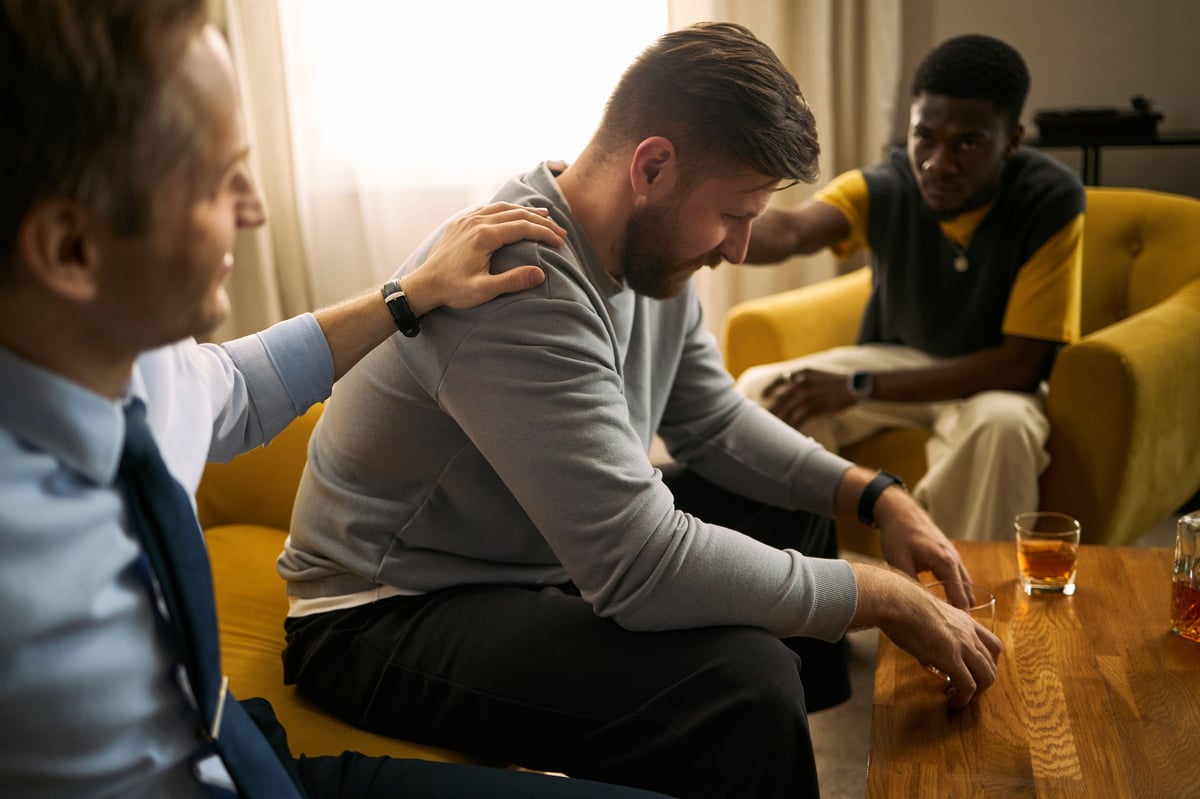
When someone you love is in the early stage of addiction recovery, it's natural to want to fix everything, smooth every conflict, shield them from every difficulty. This instinct, while loving, can unintentionally undermine the recovery process.
At Cascadia Bountiful Life, we believe recovery is a family process. We welcome family members into the conversation — our first consultation is free for both individuals and their support systems.
Cascadia Bountiful Life is an outpatient addiction treatment center located in Bremerton, WA, serving the Kitsap Peninsula and surrounding communities. We specialize in comprehensive, affordable, and compassionate care for adults navigating alcohol and drug addiction — including those in the earliest and most vulnerable stages of recovery.
Our approach is grounded in three beliefs:
Your first consultation is completely free and strictly confidential. You don't need a referral, and you don't need to have everything figured out before you call.
The early stage of addiction recovery is not a sprint to a finish line. It is the construction of a foundation — built one day, one choice, one honest conversation at a time. It is harder than most people expect, and more survivable than most people fear.
If you opened this post because you're in early recovery yourself: what you're feeling is real, it's biological, and it won't always feel this hard. Getting professional support during this window isn't a sign of weakness — it is the most strategically sound thing you can do for your long-term recovery.
If you opened this because someone you love is in early recovery: your presence matters more than your perfect words. Stay close, stay educated, and get support for yourself too.
Recovery is not a destination reserved for a lucky few. According to the Recovery Research Institute, 29.3 million Americans have resolved a significant substance use problem. That number includes people who once sat exactly where you or your loved one is sitting right now.
The next step doesn't have to be a big one. It just has to be toward help.
Cascadia Bountiful Life | Bremerton, WA
You don't need to have everything figured out before you reach out. Our first consultation is free, confidential, and without obligation. We offer outpatient addiction treatment for alcohol, opioids, stimulants, cannabis, and all psychoactive substance use disorders — with care that fits your real life.
Mon–Thu: 9 AM–5 PM | 2817 Wheaton Way, Suite 205, Bremerton, WA 98310
No commitment. No judgment. Just a conversation.